





|
I put a lot of energy into getting an interview with Robert Novak who was recently the commencement speaker at the University of St. Francis. While I worked at getting the interview, I fantasized about being able to spend hours with him and getting a really in-depth interview with this outspoken critic from the far-right. After a Herculean effort, it was looking like even meeting him wouldn't be possible because of time constraints. Bummer. However, I was able to salvage disappointment by a creative mix of determination and moxie. What was to be a marathon-length interview turned out to be only fifteen minutes, but at the time, I would have been happy with five minutes.
Novak's explanation interested me, because I believe that all success originates from pain. Whether you look at the art world, the world of sport, or the world in general, we see time and again that success comes from the way a persons deals with pain. The pains will vary from person to person, but it is one of the common denominators for creating success. As I listened to his story from a half-century before, I mused over knowing that I would use his story to illustrate my contention about this counterintuitive truth that pain motivates.
I also thought about how I could reconfigure the material that I had gleaned from the interview. When I would do an hour interview, I never thought about using some of the material for articles-like this one. I would merely use the interview without thinking of other creative ways of using the material from the interview. As we drove up to our home, I was again smiling. For the last few miles, I had not spoken much. My wife shot me a quizzical look and said, "What are you smiling about? You were just complaining about not getting a lengthy interview." I replied that this was just another example of how pain yields blessings. I walked into the house and went directly to my office and wrote this article about turning bad into good. This article appeared in the Dixon Telegraph on 7/19/04.
|

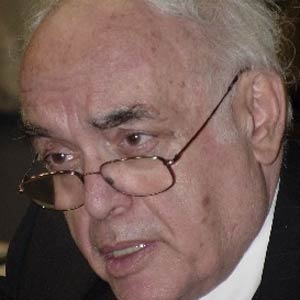 The interview immediately followed his commencement address and took place at a
reception for him. While dozens of well-wishers and autographs hounds circled
us, we huddled at a table. I fired off my questions fearing a modern-day sword
of Damocles would cut me off at any time. While researching Novak's life, I
discovered that he wrote a sports column for a Joliet, IL newspaper. I always
assumed that he had been a political writer. This was not so. He started his
writing career started as a sports reporter, and I wanted to know why he started
his career covering Joliet area sports.
The interview immediately followed his commencement address and took place at a
reception for him. While dozens of well-wishers and autographs hounds circled
us, we huddled at a table. I fired off my questions fearing a modern-day sword
of Damocles would cut me off at any time. While researching Novak's life, I
discovered that he wrote a sports column for a Joliet, IL newspaper. I always
assumed that he had been a political writer. This was not so. He started his
writing career started as a sports reporter, and I wanted to know why he started
his career covering Joliet area sports. 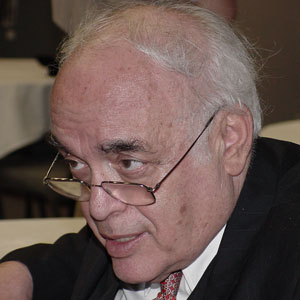 Novak explained that his father was a pretty good athlete in school. However,
he didn't inherit his father's athletic gene pool and never succeeded at
sports. Therefore, he did the next best thing; he wrote about those that did
thus turning bad into good.
Novak explained that his father was a pretty good athlete in school. However,
he didn't inherit his father's athletic gene pool and never succeeded at
sports. Therefore, he did the next best thing; he wrote about those that did
thus turning bad into good.