





|
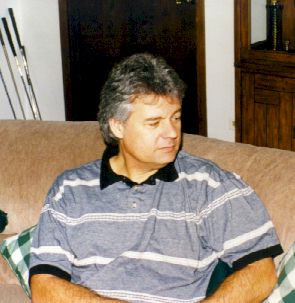
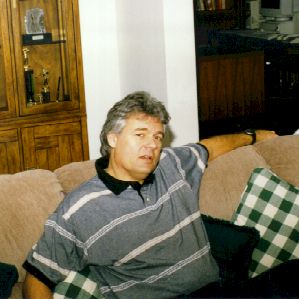
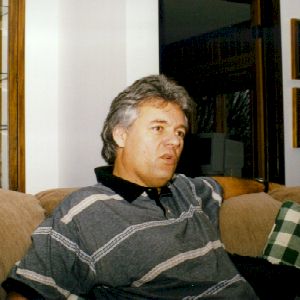
I heard a radio commercial for a new noninvasive heart test called Coronary Artery Screening. During the commercial, Mike Coli told how this new test saved his life. He had no symptoms of heart disease, and yet the test indicated that he did have substantial blockage. I had heard enough: I made an appointment to take the test. My results were excellent: I had no heart disease. After writing an article for my newspaper about my experience, I wanted to interview someone whose life was saved by the test. With Mike and his wife, Maureen, we discussed Coronary Artery Screening. The interview that you are about to read took place with a man that could have died of a massive heart attack. He had no symptom of his heart condition. Without Coronary Artery Screening, this interview would never have taken place. Al: First of all, what nationality is Coli? Where did your people come from? Mike: I'm Italian. The history of the name is interesting. In the 17th century, Count Cola from Germany invaded a northern portion of Italy and ruled it as a feudal lord. He married an Italian woman and his descendants carried his name until some time in the 18th century when it became Coli. Al: As one of the Count's recent descendants, where were you born and raised? Mike: I was born and raised in the Chicago area. I went to grammar school at St. John Vianny. I attended high school at the Judson School in Scottsdale, AZ. Later, I graduated from Elmhurst College with a major in Business Accounting.
Al: What's it like being married to a union president? Maureen: It's interesting because Mike makes life interesting. Al: From what I have heard about your husband and his Coronary Artery Screening results, life has been interesting. After getting my results back, I was very relieved to find that even with my family history, I had no measurable heart disease. In addition to being relieved, I was impressed by the test itself as a way to screen for early detection of coronary disease. I write a newspaper column and thought that my readers could benefit from this test. I sent a copy of the article to Richard Saunders at Heart Check America. We talked over the phone several times since then, and he set up this interview. How did you hear about this test? Mike: I first heard a commercial for Heart Check America in which Dr. Kondos of the University of Illinois Medical Center ran through a list of the risk factors for coronary disease. Factors like weight, high cholesterol, family history, cigarette use, diabetes, high blood pressure, and stress. Out of the seven, I had six. After that, I decided that I should look into the test. I went in and took the test, and a week later I had the results. I found out that my coronary arteries were really clogged up. I was in the top few percentile of people with potentially serious heart disease. I made an appointment at Mayo Clinic and several days later I was admitted. At that time, they were not familiar with using a CAT scan in diagnosis of heart disease. They gave me all of the traditional heart tests including an angiogram. The angiogram determined that I was ninety-percent blocked in six locations in my arteries. The worst blockage was at the top of the heart. My cardiologist said that it could have closed within a couple of months, that I would have had a massive coronary, and that I would have certainly died. Who knows why we do things, but the Coronary Artery Screen literally saved my life. I had no symptoms and had six blockages that required triple bypass surgery.
Al: Do you recall what your cholesterol numbers were before you started your new regimen? Mike: My cholesterol was about 280! After I became a vegetarian, started to exercise, and lost weight, my cholesterol dropped to 160. I was able to do this with just diet and exercise. Al: Do you take an aspirin everyday? Mike: I take an aspirin everyday along with Zocor. Also, I take a pretty heavy-duty vitamin supplement.
So, I asked him how long it had been since he had seen his cardiologist. He said that it had been about nine months. He went on to say that he was afraid that they would want to do surgery on him. I said, "You are not of afraid of dying, but you are afraid of them cutting on you so that they can fix you? That doesn't make any sense." That was on Sunday. Monday he finally made an appointment and died of a heart attack that Wednesday. Al: People often fear finding out something that is potentially life threatening. Because of that or because of the fear of getting it fixed, they don't act. Richard Saunders tells a story about another person who was touting the heart scan to a friend. The friend responded, "What difference will this scan really make? You are going to die of something." The other replied, "Yes, I will die of something, but it won't be from ignorance." Mike: That's certainly true. Al: My getting a clean bill of health, as far as my heart is concerned, has given me a new lease on life. How has having triple bypass affected you emotionally? Mike: It has made me re-evaluate a lot of things. We think in terms of living to seventy or eighty. However, with diabetes, one modifies that outlook a little. If someone told you that you have five or ten years yet to live, would you keep doing the things that you are doing now? I asked my doctor about what I could expect my life expectancy to be.
Mike: In addition, they have come up with two procedures for those suffering from heart disease. One is to puncture a lot of holes in your heart to increase blood flow to the heart. The other is gene therapy. They injected a gene into the heart of a man with severe coronary heart disease. Within three weeks, tests indicated that the heart was growing new arteries from peripheral blood vessels. I believe that if those suffering from heart disease can hang on for another five years, the new technologies will give real hope to those with heart disease. For me, my concern is more with the diabetes that ravages the body. Maureen: I am convinced that it was the diabetes that caused the heart disease. Mike: With diabetes, you die from the things that go wrong with your body because of the diabetes.
The medijector shoots a real small stream of insulin that comes out of the tip with such speed that it penetrates the skin. The advantage of this over the needle is that as soon as the insulin gets under the skin, it disperses. When you use the needle, the insulin pools under the skin causing it to take longer to get into your system. In addition, using the hypodermic syringe doesn't allow you to reuse that site for a long time. Al: You see the need for a healthy lifestyle and the heart screening test; you are alive because of making these changes and getting the test. Has your conversion to aggressively take care of yourself had a positive effect upon the eating habits and lifestyle of your children? Mike: As teenagers, they think they are made of iron and feel indestructible. Maureen: When their father came home from the hospital, he showed them the incision, but it didn't make much of an impact upon them. Mike: The twenty-year-old stopped smoking for awhile and then went back to it. The eighteen-year-old took the surgery a little more seriously. The fourteen-year-old would rather go to a fast-food restaurant then to eat a healthy meal at home. Maureen: If it is a choice between junk food and healthy food, they will take the unhealthy food. They will wise up, given time-but it will take time.
Mike: I guess that everyone has some kind of legacy that they leave behind. For me, I hope that I will have raised good citizens. I'm really only concerned about my children growing up to be good citizens. If we are successful in doing that, all the other things that I might accomplish really aren't that important. If my kids are good people and they try to help other people, I will be happy with that legacy. Al: Maureen, what do you think of Mike's response? Maureen: I agree with Mike's answer; he does love his family. Also, he feels strongly about things and is a good leader because he can generate that feeling in other people. I'm proud of him. Al: Mike, thank you and Maureen for your time and willingness to be interviewed. Any thing that you would want to add? Mike: Get the test. Call 1-800-NEW-TEST. |

 Al: What do you do for a living now?
 Al: That is scary. Half a million Americans
die each year from heart attacks. One third of them never had any
symptoms either.
Al: That is scary. Half a million Americans
die each year from heart attacks. One third of them never had any
symptoms either. 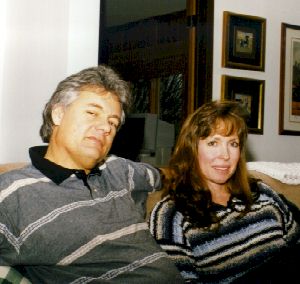 Al: Maureen, has Mike's situation changed your eating habits?
  Al: What did he say?
 Al: How serious is your diabetes?
 Al: Mike, someday we will all run out of time
here on earth. What do you want written on your epitaph? How do
you want to be remembered?
Al: Mike, someday we will all run out of time
here on earth. What do you want written on your epitaph? How do
you want to be remembered?