





|
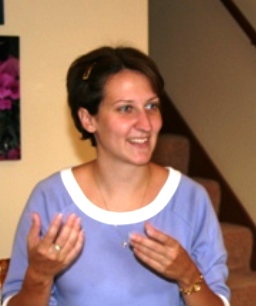
Al: What lead to this decision? Several years ago, you were thinking about working with chimps in Kenya. Michelle: For a long time now, I have dreamed about going to Africa. I remember even in high school daydreaming with a close friend about exploring the continent together. Later, when I attended Earlham College, I became interested in primatology and desperately wanted to take part in my school's study abroad program in Kenya to learn about wild chimpanzees. However, after some negative reports from students coming back about the structure of the program, I decided not to go and soon chose a more "realistic" career path - helping children rather than chimps. Al: Why jump from chimps to kids? Michelle: Well, I think my interest in both of them stems from the same underlying feeling - a feeling that I can connect with them in some way and understand them. Whether it's looking into a chimp's eyes and seeing intelligence or exchanging smiles with a toddler, it evokes the same feeling in me. And that feeling makes me want to be a bridge between them and the "adult world." Al: While I don't want to do psychotherapy with you during an interview that will be viewed by millions, have you ever wondered how this need of yours is related to your childhood? Michelle: I think that is does relate. I was the youngest of three. My next oldest sibling was 7 years older than me. We lived in a neighborhood where there were no other children my age, and the people I interacted with were much older than me. So, there a lot less opportunities to just be childlike.
Al: Some of my readers might wonder whether therapy might have been helpful. Just, kidding. Okay, now that you have suppressed your legion of imaginary friends, what happened once you chose kids over chimps? Michelle: Well, I decided to major in psychology. I really enjoyed it.
Al: As you know, I teach art history at the college level and tell all my students that art and creativity in general come primarily from pain. It isn't surprising that a little "Van Gogh" would express pain through drawings. Give my readers an example of this. Michelle: Well, say a child, when asked to draw her family, always draws the figures in a certain order or placement - maybe she always places herself and siblings on one side of the paper and on the opposite side, there is a very small figure for her father and a very large figure for her mother. It might indicate that she views her mother has having more power in the family than her father and that there is a clear divide between the parents and children. Not that you would use this to diagnose the child, but it gives you kind of a hypothesis that you can check as you learn more about the child and her family. Al: What is the connection between bobo dolls and drawings with Africa? Michelle: None, at that point. Africa was on the backburner.
Al: This is when you went back to school. Michelle: Yes, I entered a master's degree program in child development at the Erikson Institute in Chicago. Throughout this time period, I was becoming more and more aware of how others around the world were living - thanks to the multi-cultural focus of the master's degree program. For one class, the major project of the semester was conducting 4 interviews with mothers from a different ethnic background than our own and weaving the information we obtained from the mothers into a paper about the cultural influences of parenting. My partner and I chose to interview Native American mothers, so we drove up to Crandon, Wisconsin and learned about some cultural components of parenting from Menominee and Potawatomi mothers.
Al: That's very true, and there is even a lot of misunderstanding among different populations who live in this country as well. Michelle: Right. Think about how many cultures influence different groups of Americans. And then think about how much judging is going around. Somehow we still think that "our" way is the right way. That's just not the case. I would bet that if you asked some Caucasian Americans if it's healthier for a child to sleep with her parents or to sleep by herself, in her own room, most would say that it is healthier for her to sleep in her own room and that unhealthy attachments might form if she continues to sleep in her parents' bed into middle childhood. But in reality, I think the figure is more than 90% of the world engages in co-sleeping. In some countries, having a baby sleep alone in a separate room is considered neglect by the child protection agency.
Al: Why not? That would seem a real fit. Michelle: My classes at the time were focused on optimum child development. It just seemed so far removed from what Africans were facing on a daily basis. I knew all about when infants make their first utterance or take their first step. I could explain how pretend play allows the preschooler to process situations they have faced while giving them a natural opportunity to practice language. But it all just seemed so trivial when I thought of an African mother's last fears and wishes for her child as she dies of AIDS. I doubt she thinks about when her child will combine words into sentences or when her child will learn to engage in cooperative play. Instead, the dying mother is probably worrying how her child will survive - where will she get food from, who will take care of her and keep her safe (considering that most of the people they know have HIV or AIDS), will she be able to get the equivalent of $15 so that she can attend school for a year? I kept thinking about Maslow's Hierarchy of Needs that I had learned about in undergrad. He suggested that people have to get the most basic needs met first before they can devote time and thought to the need for belonging, esteem, and lastly, self-actualization. I felt like I knew all about these "higher" needs, but what good would that knowledge do for people who couldn't even get the most necessary needs satisfied? So with frustration, I resigned myself to the fact that, at least at the present moment, I was not in a place where I could truly do much good in Africa.
Al: So while you were engrossed in your internship, what happened? Michelle: At the time, Oprah did an update about the children featured in the prior year's "Christmas Kindness" show. All of the stories were, like always, very touching, and like always, I started to feel that frustration at not knowing how to help. It was just a passing comment, but I heard it loud and clear. Oprah commented on how there was a new focus on the emotional effects of AIDS and poverty on the children and that organizations had started addressing these issues.
Al: You didn't need to be struck by lightning again! Michelle: No. That was the clincher for me, that Oprah, the person who first inspired me and didn't let me off the hook, had actually been to God's Golden Acre and featured stories about some of the children there. So I applied and was accepted. Al: Like always, once you figure out where you need to go, you don't let any grass grow under foot do you? Michelle: Yeah. Whenever there is a difficult decision to make, once I get some kind of confirmation about what to do, that's it. I go for it and don't second-guess myself. Al: So what will you be doing at God's Golden Acre? Michelle: Even though I knew that I wanted to address the kids emotional issues, even with the experience I have, I know I have not had any experience that could compare with working with children who are living in poverty and death all around them. But the more I thought about it, it seems that the African children are probably lacking, in a way, the same thing that the abused and neglected children I worked with in my internship face - control. They live in a world in which they have to deal with evils that they have no control over on a daily basis. So, just as we focused on in the therapeutic preschool, I would like to focus on encouraging the kids how to have some control in their daily lives, with regards to expressing their feelings, working through social conflicts, and so on.
Al: It seems that both newspapers and magazines would be interested in your work and reporting back considering that Tony Blair is marshalling worldwide support to assist Africa. What else are you planning to do? Michelle: I would also like to get together some supplies for the kids, especially therapeutic materials. Al: What are your costs that you will have to absorb during the run-up to your leaving the States and during your year in South Africa? Michelle: Well, what I have to spend depends a lot on how much you will be chipping in.... Just joking. As far as the expense of living in Africa for a year, GGA provides accommodation and evening meals. For other meals and expenses, I'll probably need around $1000, which isn't much for a whole year. There is also the airfare, which can get fairly pricey. I am going to look into getting frequent flyer mile donations from people who have enough to spare. Other things, like a laptop for keeping the website updated and for writing articles, and a digital camera for recording the many faces of the orphanage and posting them on the website, would be very helpful as well. Al: Can you provide my readers with a little history of God's Golden Acre? Michelle: God's Golden Acre was founded by Heather Reynolds who started out by caring for very sick children in her own home. When the number kept growing, Heather moved her family and the orphaned children to what is now called "God's Golden Acre." The staff and volunteers provide the children with schooling and recreational activities while they live in foster family units on the compound. The team also does a great deal of outreach work, bringing basic necessities to hundreds of families in the area. Al: After your return from your year in SA, what will you do when you get back home? Michelle: At this point, I am in the process of looking for graduate schools for when I come back from Africa. I would like to get a doctorate in clinical psychology. However, I know that working with children in Africa for a year has the potential of steering me in a totally new direction, one that I haven't thought of yet. So we will see what happens. But I know that in one way or another, I will want to raise awareness about the crisis in Africa and continue to address those issues.
Al: Well, Michelle, I wish you the best. I know you well enough to know that your head is spinning with all sorts of plans and questions. I am equally sure that all of your plans will work out perfectly. Good luck, and as your father, I am very proud of you. |

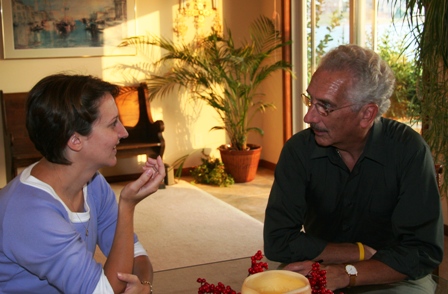 Al: Michelle,
how is it that I am interviewing my own daughter of 25 years for my
web site?
Al: Michelle,
how is it that I am interviewing my own daughter of 25 years for my
web site? 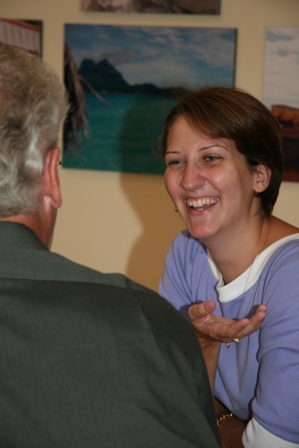 Al: You actually created a whole host of imaginary characters
who you interacted with as replacement for peers. I'm sure
that my readers would love to know some of their names.
Al: You actually created a whole host of imaginary characters
who you interacted with as replacement for peers. I'm sure
that my readers would love to know some of their names.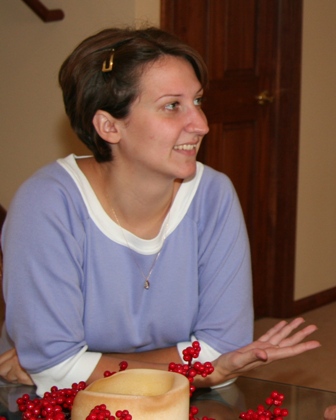 Al: What
was most interesting to you about psych?
Al: What
was most interesting to you about psych?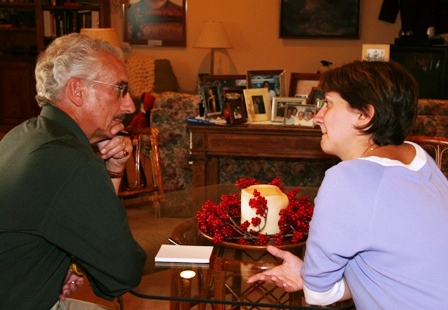 Al: While Africa was on the backburner, you graduated from
college. Then what?
Al: While Africa was on the backburner, you graduated from
college. Then what? Al: What
did you discover in your research?
Al: What
did you discover in your research?  Al: Wow. It is interesting how opposite parenting practices
both can be done in the child's best interest. So what other
influences did you have while you were becoming more aware of other
cultures?
Al: Wow. It is interesting how opposite parenting practices
both can be done in the child's best interest. So what other
influences did you have while you were becoming more aware of other
cultures? Al: Well, obviously, that wasn't the end of the story. What
door of opportunity opened for you?
Al: Well, obviously, that wasn't the end of the story. What
door of opportunity opened for you?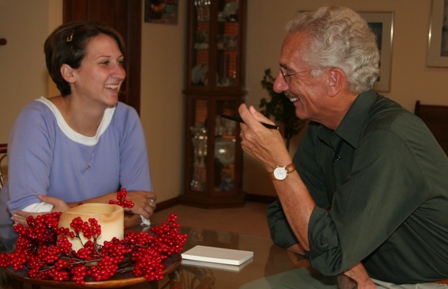 Al: Your brain must have shifted into high gear.
 Al: Now that you know you have a place to go and a job to do,
how are you going to fill the next half year before you go to South
Africa?
Al: Now that you know you have a place to go and a job to do,
how are you going to fill the next half year before you go to South
Africa?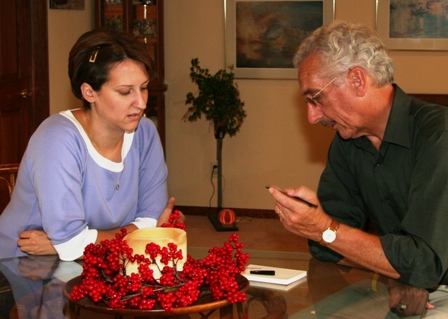 Al: Where should people go if they would like to learn more
about God's Golden Acre or about Oprah's "Christmas Kindness"
experience?
Al: Where should people go if they would like to learn more
about God's Golden Acre or about Oprah's "Christmas Kindness"
experience?