






2+2=5
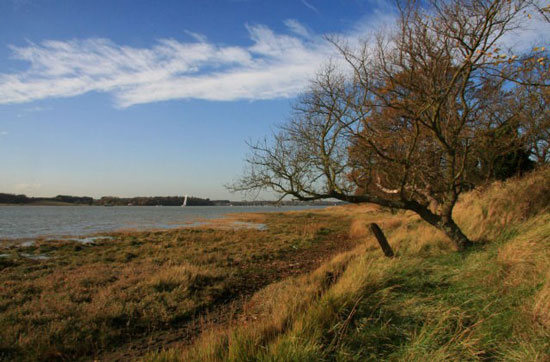
In my previous essay, I mentioned that Arthur Conan Doyle wrote nearly five dozen stories about Sherlock Holmes in addition to many other books. This article is about Eric Arthur Blair, aka George Orwell. He, too, was a prolific writer, but chose as his nom de plume from the River Orwell.
Orwell wrote all sorts of books, poetry, journals, social criticism, and essays. Everyone knows Animal Farm, which is a really simple story to get its critically important message across to its readers. Leo Buscaglia employed the same writing technique in his novella The Fall of Freddie the Leaf.
Animal Farm was published as a type of preface to Orwell’s 1984. Orwell’s point was to question the mindset of the pigs after the animals revolted against the farmer who owned the farm. The animals wanted freedom. However, the pigs merely replaced the farmer with their view of equality: “All animals are equal, but some animals are more equal than others.” When reading 1984, Big Brother essentially parallels the mindset of the pigs. He asserts that the absolute power of Big Brother means absolute inequality of his rule.
Orwell's writing spanned a truly short time, less than two dozen years. Nonetheless, his success in writing was in spite of a litany of health issues, in particular tuberculosis. He went to various places to live and to recover from tuberculosis. Interestingly, Orwell’s suffering from his medical issues can be seen in the major character in 1984, Winston. Winston had skin problems on one of his ankles and had a bad cough. 1984 was Orwell’s last novel, his literary swan song.
1984 is Orwell’s dystopian novel that deals with totalitarian government throughout the world from a metaphoric setting. When asked how he would define his political mindset, he said that he was a democratic socialist. Mayor-elect Zohran Mamdani surely is familiar with Orwell’s writings.
Even more fascinating to me was that Orwell was born in India to what is called the landless gentry class. He described his station in life as the lower-upper-middle class. His family pretended that they had money even though they didn’t. His family’s class had an air about them of impoverished snobs. Essentially, their group could lord it over the Indian population on the basis of racism and social status.
In 1922, Orwell went to Burma as an assistant district superintendent in the Indian Imperial Police. However, he realized that ruling over the locals wasn’t ethical. He authored the novel Burmese Days and two autobiographical essays: Shooting an Elephant and A Hanging, about those forms of discrimination.
Finally, Orwell knew that he couldn’t continue this attitude over the Burmese any longer and resigned after returning to England. His sense of guilt was the reason for much of his writing; it was his way of atoning for his and that of the British racial prejudice. He dressed up as a poor person and spent time in the slums of London and Paris, which is the basis of Down and Out in Paris and London. He tried to grasp the negative effects related to poverty.
Another writer, John Howard Griffin, did the same thing in the Deep South in 1961. Griffin was a white American who dressed up as a poor black. As much as Orwell or Griffin tried to walk in the shoes of others, they couldn’t. And that is true for us. Soon, we will all return to our shoes while the others remain in theirs.
Having addressed the obvious, it is also necessary to be more fully aware of reality. We don’t possess a magical wand that can eliminate all forms of imperialism, racism, sexism, ad infinitum. Still, we need to see these issues and then begin to transform our society.
Enter Raoul Peck. Peck is interestingly from Haiti, but don’t tell Trump. I bought his documentary on George Orwell entitled Orwell: 2+2=5. It begins with this scene from the Isle of Jura, which is located in the Inner Hebrides of Scotland. It is due west, 100 miles from Glasgow. Listen to the words of George Orwell about writing.
Thus began Peck’s documentary through his use of Orwell’s words. Orwell talks about going to Burma as an assistant district superintendent in the Indian Imperial Police. Reflecting upon his tour of duty, Orwell realized that he was a part of the British system of despotism.
Orwell warns of the dangers of totalitarianism. Orwell’s 1984 added new terms to our vocabulary, like Big Brother, doublethink, and newspeak. Peck’s documentary jumps to the present day with examples of 1984. The media has become the way tyrants communicate their mindsets.
I thought that Peck might have used this clip of Trump talking about not believing what you are seeing and reading. Trump is Big Brother telling us what is true; Trump would never lie.
Peck provides a litany of examples of the media and what is prescribed to say. He concludes with how the media and our 21st-century version of Big Brother are fully functional in America and the world. It should scare us to death; if it doesn’t, you need to rethink your mindset. Start by renting from Amazon and rent Orwell: 2+2=5.
Peck ends his documentary with the solution to the world in which we live. We need to think about our society and respond by protesting against authoritarianism. Last month, 7 million protestors participated in the No Kings rally in 2700 cities across our country.
These two links are excellent interviews and discussions with Raoul Peck, who made the documentary Orwell: 2+2=5.
Visit the On Seeing the Light page to read more about this topic.

Visit the Connecting the Dots page to read more about this topic.
Visit the Darkest Before Dawn page to read more about this topic.
Visit the Best and Worst of Times page to read more about this topic.
Visit the My Hauntings page to read more about this topic.
Visit the Living a Life Well Lived page to read more about this topic.
Visit the Gilgamesh page to read more about this topic.
Visit the Mentors and Me page to read more about this topic.
Visit the Donald the Dumb page to read more about this topic.
Visit the Stupid is as Stupid Does page to read more about this topic.
11/21/25