






A Present-Day Ibn Battuta
In a previous article, It Started with Obama and Camelot, I was going to write about something Mark Twain had written: “The two most important days in your life are the day you are born and the day you find out why.” However, I discovered Twain didn’t pen that one-liner. Rev. Ernest Campbell, a Presbyterian minister who was the senior pastor of the Riverside Church in New York City, said it in 1970, and added this sentence about sharing with each other.
This essay is about what Mark Twain wrote about the advantages of Travel, and it is his book The Innocents Abroad: The New Pilgrims' Progress (1869).
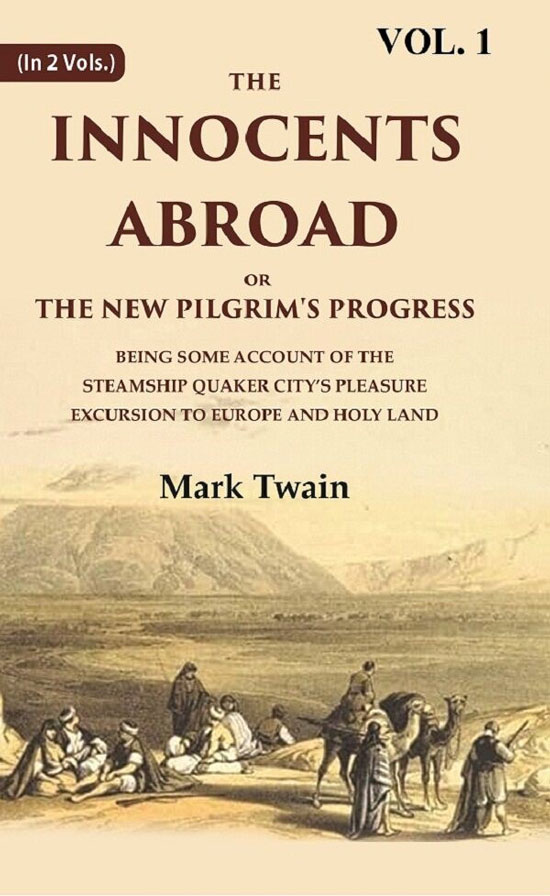
Twain wrote, "Travel is fatal to prejudice, bigotry, and narrow-mindedness, and many of our people need it sorely on these accounts. Broad, wholesome, charitable views of men and things cannot be acquired by vegetating in one little corner of the earth all one's lifetime."
A half millennium prior to Twain, Ibn Battuta wrote this about Travel: “Traveling—it leaves you speechless, then turns you into a storyteller.”
Battuta’s mindset informed Twain; he became a storyteller also. Additionally, some of Twain’s stories were written to inform and educate a large percentage of America. I wonder what percentage of Americans, back in Twain’s time or ours, have adventured outside our borders. Twain didn’t want Americans to remain living in their small, cloistered existence without seeing at least some of the world.
Twain wasn’t merely pushing Travel to enjoy the sites like the Great Wall of China, Notre Dame, Mandalay, or Tahiti. He wanted the masses to learn, through travel, that people who aren’t identical to us aren’t less than us. All cultures, ethnicities, and races contain a vast abundance of ideas, thoughts, religions, paintings, architecture, and wondrous landscapes. America doesn’t have a monopoly on all things culturally.
If you totaled all the time I spent overseas, it would be over two years. During that time, I have learned things about hundreds of places, people, ideas, and mindsets.
The saying, "The world is a book and those who do not travel read only one page," has been attributed to St. Augustine. There is no evidence that he wrote or said anything similar to it. The closest version was written by the 18th-century French writer, Fougeret de Monbron, in Le Cosmopolite: "The universe is a sort of book, whose first page one has read when one has seen only one's own country.”
George Santayana's Atoms of Thought: An Anthology of Thoughts contains this famous one-liner: “A child educated only at school is an uneducated child.” Santayana pushed travel as a great teacher.
This brings me to my web administrator, who lives in the Philippines. Since my father spent some time in the Philippines before returning home after WWII, we have emailed each other about her country. I sent a photo of a letter that Cory Aquino wrote to me regarding my letter to her regarding the EDSA Revolution in 1986.
I have a friend that I see on a regular basis, who was born in Manila. I told him the city where my web administrator lives. However, I had no real idea of the location. So, as I scanned a map of the Philippines. In the midst of my search, I found Allen, Northern Samar.
It is a port with a population of around 25,000 people.
I found a very nice recent video of Allen.
What fascinated me was that the town was renamed after General Henry Tureman Allen, who was an American military governor of the area of the Philippines after the Spanish-American War. As a result of the war, the Treaty of Paris ceded Cuba, the Philippines, Puerto Rico, and Guam to the United States. We paid Spain $20,000,000 for buildings and public works in the Philippines.
While I discovered Allen in the past few days, my mind darted around what I would experience and learn after spending a couple of weeks wandering around this port city and meeting the locals. Travel changes one’s Weltanschauung (worldview).
The following video deals with The People Power Revolution and Cory Aquino.
Visit the On Seeing the Light page to read more about this topic.

Visit the Connecting the Dots page to read more about this topic.
Visit the Living a Life Well Lived page to read more about this topic.
Visit the Mentors and Me page to read more about this topic.
06/26/26