






And Branched Out To My Family
On the day before Juneteenth last week, I watched the dedication of the Obama Presidential Center. As I watched entertainers, singers, and speakers, I felt my mind traversing back to when it seemed that Camelot was right around the corner. At that moment in time, Sen. Barack Obama from Illinois was running as a candidate for the presidency.
I recalled the feeling that nothing could stop the Obama train. Michelle, my daughter, and I went to one of his rallies at Roosevelt High School in Gary, IN, years ago. This is one of the hundreds of photos that I took that day. I couldn’t have been 20 feet from him while taking pictures. I felt like the official photographer of Camelot.

As the song goes, “Don't let it be forgot, that once there was a spot, for one brief shining moment, that was known as Camelot.” Camelot does seem far away and nearly forgotten. However, President Obama addressed that issue at the opening of the Obama Presidential Center last week.
It was then that I thought about a saying attributed to Mark Twain. “The two most important days in your life are the day you are born and the day you find out why.” I googled the saying to discover the context of Twain’s one-liner. It turned out that Twain never said it.
So, who wrote that saying? Rev. Ernest Campbell, a Presbyterian minister, was the senior pastor of the prestigious Riverside Church in New York City. That one-liner was in a sermon that he wrote in 1970. “It has been said that the two most important days of a man’s life are the day on which he was born and the day on which he discovers why he was born.”
If you wish to capture the attention of listeners or readers, it is an excellent means. It was a type of O. Henry-esque one-liner. Instead of waiting for his congregation to process the question, Campbell states why we are born. “To love the Lord our God with all our heart and soul and mind and strength, and our neighbor as ourselves.”
Regardless of one’s religious background, Campbell was saying our neighbors essentially are a part of us...a part of our family. Some of us don’t buy into the idea of racial equality. The North won the Civil War but lost the peace. Racism hasn’t yet been addressed by our nation. As for sexism, I don’t see any real difference between racism and sexism. In both issues, one’s station in life is determined by birth.
That was the backstory. This is where it affects me personally. I discovered my family: my children, who are the parents of my three granddaughters, a dozen years ago. On my third trip, we went on our family tour together. During that trip, I discovered my great-granddaughter. She has an older sister, who is also my great-granddaughter, and their parents are my grandchildren. In toto, my family consists of nine people from Myanmar. I have supported them on their yellow brick road. They are family.
However, who benefits from my financial support? Granted, they do at one level. However, I am also a beneficiary. It all goes back to my mantra: It is in giving that we get. My family lives in a developing country in Southeast Asia. I can’t financially do all that I wish, but they are my family.
Ti Ti, my granddaughter in the first family, tried to get a student visa to go to college where I was teaching here in the States. During the first attempt to obtain a student visa at the US Embassy in Yangon, a white male employee was sitting in on her interview. Halfway through the interview, he told the female interviewer to turn off the video. He talked to the interviewer. Ti Ti remembered the interview and how the two employees discussed Ti Ti at the other side of the room. She didn’t hear what was said, but she wrote to me about the male who kept shaking his head, indicating that he didn’t want the interviewer to grant Ti Ti a student visa. The interviewer denied her a student visa, but said that she could request another interview. Ti Ti applied again twice. On the second and third attempts, the white male was the interviewer. He never provided Ti Ti with a reason why he wouldn’t grant her a student visa.
Nevertheless, Ti Ti graduated from Gusto University this year with honors with a Bachelor of Science in Computer Systems Engineering.
This was Ti Ti’s senior paper, a requirement before graduating. I read every word of her term paper. Still, I was not capable of grasping her topic, A Systematic Review of Predictive Modeling of User Disengagement and Compensation in Wearable Health Feedback Systems.
Racism and sexism aren’t unique to America. George Orwell, his pen name for Eric Arthur Blair, is one of my mentors. He was the son of a British colonial civil servant. India and Burma were under the control of the British from 1824 to 1937. Orwell served in the Imperial Police in Burma for a handful of years before resigning.
The rest of his life was devoted to writing. He wrote A Hanging (1931), which was an essay that addressed the indifference of the British prison system when executing a Burmese prisoner. Burmese Days (1934) is a novel about his critique of British colonial rule in Burma. It was followed by Shooting an Elephant (1936), which explored issues of racism and control over the Burmese people.
Most Americans have read Animal Farm and Nineteen Eighty-Four. It wasn’t long after the book was published before the term Orwellian was created to describe the dystopian mindset.
This link is PBS’s video of the Obama Presidential Center.
This is a PBS article on Orwell in Burma.
Visit the On Seeing the Light page to read more about this topic.

Visit the We Are Family page to read more about this topic.

Visit the Connecting the Dots page to read more about this topic.
Visit the “I’m Alive!” page to read more about this topic.

Visit the Dreaming Dreams page to read more about this topic.
Visit the Darkest Before Dawn page to read more about this topic.
Visit the Best and Worst of Times page to read more about this topic.

Visit the Ti Ti page to read more about this topic.
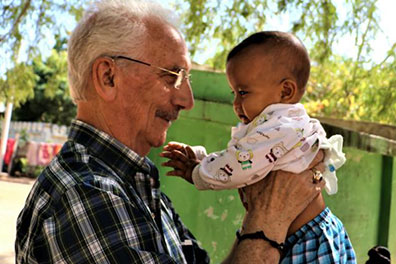
Visit the A Ngal Lay page to read more about this topic.
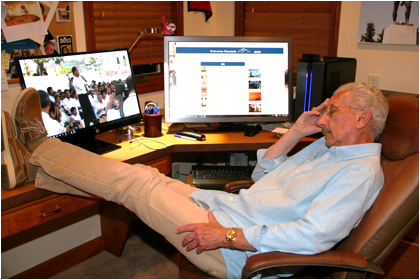
Visit the My Hauntings page to read more about this topic.

Visit the Living a Life Well Lived page to read more about this topic.
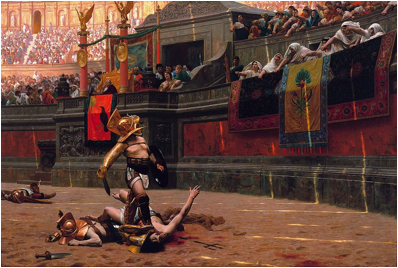
Visit the Man in the Arena page to read more about this topic.
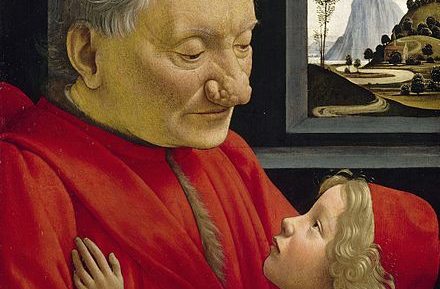
Visit the Mentors and Me page to read more about this topic.
Visit the Burma/Myanmar page to read more about this topic.
06/22/26