






Or Learning About How We Should Live
Many think that the bombing of Hiroshima and Nagasaki ended WWII. It didn’t. The fire-bombings of Tokyo on the night of March 9–10, followed by the one on May 25-26, 1945, were the two most destructive bombing raids in the entire history of warfare. The March and May fire-bombings leveled a total of nearly 40 square miles of buildings in Tokyo. The two raids killed a couple of hundred thousand civilians and left millions homeless.
The March 1945 raid caused more destruction to Tokyo than the total destruction of the bombing of Dresden, Hamburg, Hiroshima, and Nagasaki. That was the historical mindset for the Japanese military.
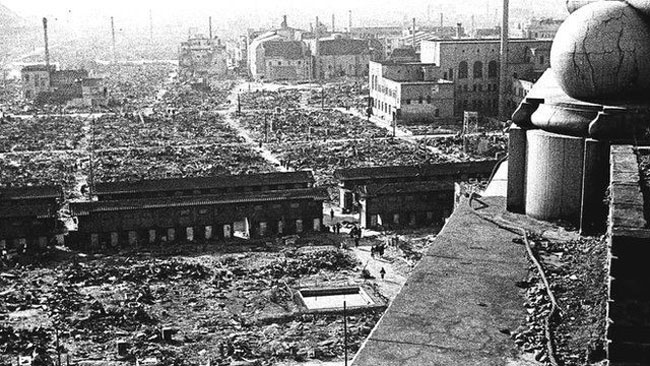
Tokyo after the March 9th raid
Since they endured those carpet-bombings, it didn’t seem that Hiroshima and Nagasaki would cause them to capitulate. If the two major bombings of Tokyo didn’t dissuade Hirohito, the use of two atomic bombs probably didn’t have their intended effect. In addition, the US was still bombing Japan even after Nagasaki.
On August 14, nearly 150 US bombers headed toward Tokyo in a predawn mission. The Japanese military thought that the Americans were going to fire-bomb Tokyo again. The military ordered all the lights in Tokyo to be turned off.
As it turned out, the bombers weren't going to bomb Tokyo. It was merely the destination where the bombers were going to break up into different groups and fly to their targets.
On the same date and time of the predawn raid, Lieutenant Colonel Masataka Ida and Major Kenji Hatanaka were in the middle of a coup in the Imperial Palace that night. For whatever reason, Hirohito had decided to surrender; he had recorded his surrender announcement on the 14th, and it was to be broadcast to the nation the following day.
Had it not been for some bombers flying near Tokyo, the coup by some Japanese military brass would have arrested or killed the emperor. The officers involved in the coup were searching for Hirohito’s surrender speech that night. The lack of light made looking for the prerecorded message much more difficult.
Therefore, much of our history needs to be corrected, whether it is military history or any other history, like Olympic history. Case in point. The history of the 1936 Summer Olympic Games in Berlin has half and often totally untrue historical stories.
Jesse Owen won 4 gold medals in track and field. He won first in the 100m, 200m, 4x100m relay, and long jump. There are a variety of historical accounts that can be readily found in the media at the time. It is true that Hitler, who was into the Aryan race mindset, didn’t congratulate Owens for any of his of his 4 gold medals. At one level, that is correct. Hitler didn’t congratulate Owens for any of his 4 gold medals. However, according to the Olympic rules, the head of state can either congratulate all winners or not congratulate any winners. It was a simple either/or choice, and Hitler chose not to congratulate any winners.
That being said, we can learn from history, especially by observing how people demonstrate how we should act while creating history. In this case, Jesse Owens should be our mentor.
Owens was having trouble qualifying for the long jump. His problem was that he wasn’t able to avoid being over the line at his takeoff, which would disqualify the jump. The story of Luz Long, Owen’s German competitor, provided him with help to avoid takingoff over the line. As a consequence, Owens was successful in winning the gold medal. Long got the silver medal.
This is Owen’s record-breaking jump, which lasted for a quarter-century.
It is also important to learn the rest of the story related to Owens and Long. It was Long who was the first to praise Owen. It took him a second to rush to the side of Owens after his jump.
History can be an excellent mentor for each of us. It took guts for Long to embrace Owen in Berlin, Germany, just prior to WWII. Owens wasn’t a white Aryan, but he, like Long, was a human being.
Therefore, history needs to be corrected all the time based on more facts and not upon hearsay, feelings, or prejudices.
These two documentaries are about Jesse Owens and the 1936 Olympics.
Visit the On Seeing the Light page to read more about this topic.
Visit the We Are Family page to read more about this topic.

Visit the Connecting the Dots page to read more about this topic.
Visit the Darkest Before Dawn page to read more about this topic.
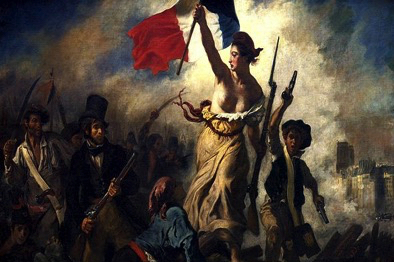
Visit the Best and Worst of Times page to read more about this topic.

Visit the Living a Life Well Lived page to read more about this topic.
Visit the Gilgamesh page to read more about this topic.
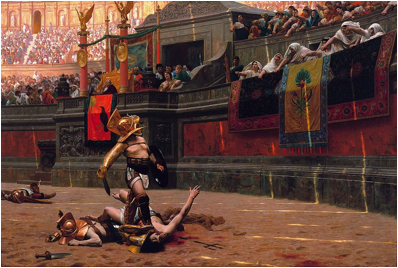
Visit the Man in the Arena page to read more about this topic.

Visit the Donald the Dumb page to read more about this topic.
Visit the Stupid is as Stupid Does page to read more about this topic.
02/23/26