






The Basic Question of Life
I have written many articles about Rudyard Kipling and his poems. Everyone knows, On the Road to Mandalay, “where the flyin'-fishes play, and his tribute to Gunga Din, “You’re a Better Man than I Am, Gunga Din!” Kipling’s poem If ends with “you’ll be a Man, my son!”
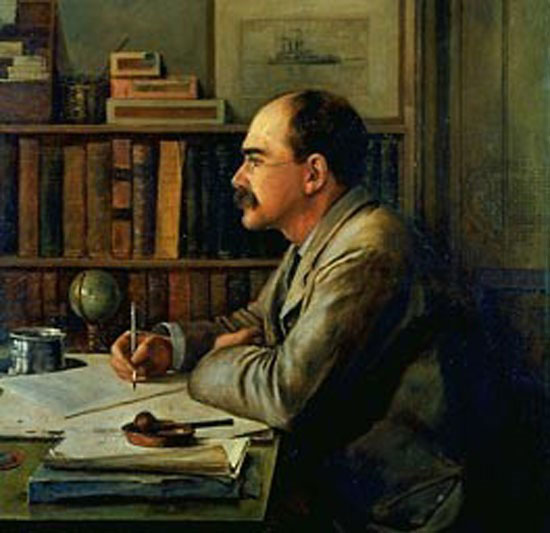
This essay is a version of Kipling’s If. It’s about life and raises the question, what if something happens or doesn’t? I can give you a long list of people who have helped me on my journey down the yellow brick road of life. Brooks Oakford, Louie Palmer, Joe Mulligan, Leo Buscalia, Carl Sagen, Dr. Norbu. Chuck Colson, Cory Aquuno, Bill Shaw, Wendy Olmsted, Mike Schmidt, et al. Some of the help was in the form of letters, time spent with me, hiring me as a teaching assistant, and comments over dinner. I wouldn’t be the person I am today without those people believing in me and spending time guiding me in my journey.
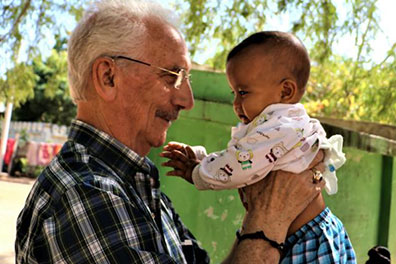
What if Ti Ti didn’t ask me to play Scrabble when we first met? I wouldn’t have discovered my family along with my great-granddaughter, A Ngal Lay. I’m more driven and happy than I have ever been. It changed my Weltanschauung. The only downside is that I miss them, and my clock is ticking.
What is equally interesting is what if I hadn’t reached out to my family living in a developing country, ruled by a military junta. If I hadn’t helped them as others had helped me in life, what would their lives be like?
Let me provide you with two examples regarding Ti Ti. She is brilliant; however, if she were to attend college in Myanmar, she would have to move in with her grandmother, who lives in a large city, Taunggyi. It had a very good college prep high school. During the day, she went to high school, and in the evening, she had two private tutors. I went to see Ti Ti one evening to chat with her between her tutors. We talked for five minutes before the second tutor arrived.
Ti Ti was excited about showing me what she gave the tutor to grade. It was a single page of paper...which was filled with numbers, signs, and letters. It looked like something Einstein had worked on. I was stunned. I didn’t understand anything that she had written. It was given to me to show that she was improving her math skills. It was said as if I was beyond where she was, but she was working hard to get up to my level.
The second illustration relates to Ti Ti getting her Bachelor of Science (Honours) in Computer Systems Engineering at Gusto University. It is a branch of the University of Gloucestershire in the UK.
I recently received an email from Ti Ti with an attachment. It was a thirteen-page paper. This is the title and the first paragraph.
CET351 Research - Project Plan
Nang Su Yati
240793669
Bachelor of Science (Honours) in Computer Systems Engineering
GUSTO University
A Systematic Review of Predictive Modelling of User Disengagement and Compensation in Wearable Health Feedback Systems
Word count <3070 words>
1. Justification of the Research Proposed
Wearable health technologies have become an integral part of modern health monitoring, enabling continuous collection of physiological, behavioral and contextual data through devices such as smartwatches, wristbands and mobile-connected sensors. These systems promise improved self-management, early detection of health issues and long-term behavior change, but their effectiveness relies heavily on sustained user engagement and appropriate behavioral responses to feedback (Gjoreski et al., 2024; Zhao et al., 2025). Despite rapid advancements in sensor quality and data analytics, a persistent limitation in these systems is their reliance on static, non-adaptive feedback that does not account for users’ psychological diversity or behavioral tendencies.
I would have copied the entire paper. However, I had no idea what the subject matter was or the issue that Ti Ti addressed. I understand all the words in her paper, but I didn’t understand even a simple sentence.
When I got my doctorate at McCormick in Chicago, I defended my paper with my advisor in front of several McCormick professors. What Ti Ti attached is similar to what I had to do. I assume that Ti Ti will do something similar. When I ask Ti Ti when she will graduate, she says sometime in January or February.
A final comment about Ti Ti. The British colonized India (including Pakistan) in 1857. They were also fighting to annex Burma in 1826, which is now called Myanmar. Essentially, India and Burma were British colonies.
One intriguing thing about Ti Ti is that she is fluent in American English. Although when writing English, she uses the English spelling of some words. In her term paper, she uses Honours: Bachelor of Science (Honours) in Computer Systems Engineering.
This article is an example of my personal mantra: “It is in giving that we get.” Giving is a reciprocal action. The more you give in any manner, the more you will receive. Another means to make my point is what Morgan Freeman says about the two questions that are asked when an Egyptian dies. “Have you found joy in your life? Followed up by “Has your life brought joy to others?”
Watch that scene in The Bucket List on my website.
This link is to Rudyard Kipling’s If.
Visit the On Seeing the Light page to read more about this topic.

Visit the We Are Family page to read more about this topic.

Visit the Connecting the Dots page to read more about this topic.
Visit the “I’m Alive!” page to read more about this topic.

Visit the Dreaming Dreams page to read more about this topic.

Visit the Ti Ti page to read more about this topic.
Visit the A Ngal Lay page to read more about this topic.
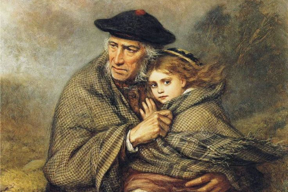
The Hand May Be a Little Child's
Visit the The Hand May Be a Little Child's page to read more about this topic.

Visit the Living a Life Well Lived page to read more about this topic.

Visit the Burma/Myanmar page to read more about this topic.
01/09/26