






An Update in Understanding
But first, the backstory. I called my local Costco, which is located in Merrillville, IN, to find out if my monthly cyclosporine capsules were ready for Ginger, my nine-year-old Irish Setter. At the other end of my call was a really friendly, nice guy. His name was Julius. He wanted to be helpful in finding out whether Ginger’s script was ready. It took him less than ten seconds to determine that Ginger’s script was ready for pick up.
I was delighted, and instead of saying thank you, I used the following sentence when people care about addressing my questions. I said to Julius, “You’re a better man than I am, Gunga Din!” He responded to my one-liner from Rudyard Kipling’s poem, Gunga Din. When I stopped at Costco to pick up Ginger’s meds, Julius and I talked about the movie and poem. This is a photo of Julius.

I have used the thank you for years. While that sentence is sincere, the background of it is tied to a racist and xenophobic British colonial mindset. Kipling wrote this poetic tribute to a water-carrier for the British military in India in 1890.
The British colonized a quarter of the landmass of the world by the time of Kipling.
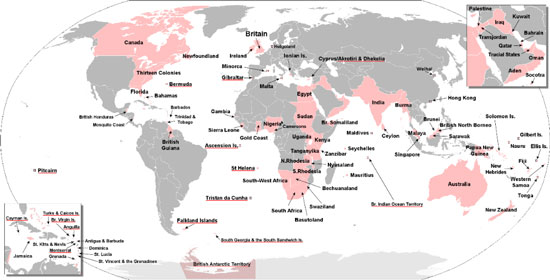
The British colonial attitude was that the Brits were vastly superior to the local Indians. At the time, the British believed that if you weren’t a white Anglo-Saxon, you were subservient to them. It goes back to the Royal We. The kings and queens of England worked together in a partnership with God.
As arrogant as that belief is, it is an excellent parallel to America's attitude toward the land, the treatment of the Native Americans, and slavery. It was called Manifest Destiny. I was in college when the Civil Rights Act of 1964 and the Voting Rights Act of 1965 were passed. This was a century after the Civil War. Today, we still discriminate against anyone who isn’t white.
In 1939, three years before my birth, Hollywood produced the film Gunga Din, which was an adaptation of Kipling’s poem. Gunga Din was a bhisti, which was a regimental water-carrier. His job was to carry water into a battle for British soldiers. In that subservient position, Gunga Din, a water carrier, was considered a noble savage when he died during a battle while protecting his master, a British soldier. Kipling ends his poetic tribute with this stanza:
Though I've belted you and flayed you,
By the livin' Gawd that made you,
You're a better man than I am, Gunga Din!
Kipling’s racism in his poem can be seen in the movie. One art form, poetry, is bested by another form, the movie, as it shows a blatant racist attitude. The person playing Gunga Din is a white actor in blackface. America is so racist that the film used a white actor who apparently can act better than a non-white actor playing a non-white character. This is the closing scene of Gunga Din.
Interestingly, not all Brits were racists in colonial India. Eric Arthur Blair, better known to us as George Orwell, worked in the Indian Imperial Police Force in Burma. Burma was a province of India until 1937, when it became a separate colony until Gen. Aung San forced the British out of Burma a decade later.
Orwell’s Burmese Days railed against the British attitude toward the Burmese people. He wrote that the British viewed the locals as less than the Brits. Orwell was left of center politically. For him, the British were “jingo imperialists” or what we would call racist or, more to the point, white supremacists.
For me, Orwell was correct. Since going to the University of Edinburgh for a year of postgraduate studies, I have traveled throughout the world. While in Burma, which is called Myanmar, I discovered my family a half-dozen years ago.

Several years ago, on my third trip to visit my family, we went on a family tour during winter break from my teaching. One of the places we went to was a small village called Ser Set Yo. It was there that I discovered my great-granddaughter.
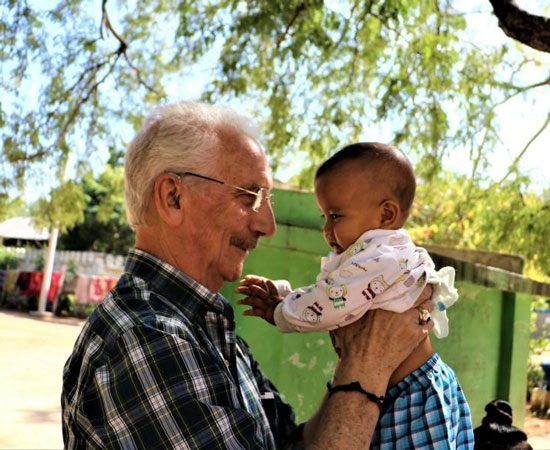
In the past two decades, I have visited twenty countries. The only country that was permanently white Anglo-Saxon was my second trip to Scotland. All the other places were in the Middle East, Africa, Asia, South America, and several islands in the Pacific. White Anglo-Saxons aren’t superior to any other group in the world.
One final point, by the time that I turn 100, 16.5 years from now, America won’t be a majority-white nation. Interestingly, also, the first thing that I would do when I was teaching each semester, I would look at the roster of my new students. The more names that I couldn’t pronounce, the more delighted I was. Diversity helps the educational process.
This is the entire 1939 movie, Gunga Din.
This is an excellent article from Brookings regarding America becoming a minority white country.
The US will become ‘minority white’ in 2045, Census projects.
Visit the On Seeing the Light page to read more about this topic.

Visit the We Are Family page to read more about this topic.

Visit the Connecting the Dots page to read more about this topic.
Visit the Darkest Before Dawn page to read more about this topic.
Visit the Best and Worst of Times page to read more about this topic.

Visit the Thus Spoke Ginger page to read more about this topic.

Visit the Ti Ti page to read more about this topic.

Visit the A Ngal Lay page to read more about this topic.

Visit the My Hauntings page to read more about this topic.

Visit the Living a Life Well Lived page to read more about this topic.

Visit the Donald the Dumb page to read more about this topic.

Visit the Stupid is as Stupid Does page to read more about this topic.
Visit the Burma/Myanmar page to read more about this topic.
04/20/26