






The Uprising Is a Cautionary Tale
As I have journeyed down my yellow brick road, I noticed my proclivity to attend opening nights at theatres and movies. I attended the openings of these plays: Evita, The Phantom of the Opera, and Les Misérables. I also went to the openings of these movies: Oppenheimer, Song Sung Blue, and Les Misérables.
The opening of The Uprising: The Rise of Robin Hood was September 11. However, the movie theater had a limited showing on the 10th, a special early opening. There I was, seated, waiting for The Uprising to begin. The movie begins by introducing the main character, who was just a farmer.
This essay isn’t about the title, which was originally The Hood. Then it morphed into The Uprising. Nonetheless, the movie has its final name, The Uprising: The Rise of Robin Hood. The movie is “Set against the true events of the Uprising that helped inspire the legend of Robin Hood, forms an army of the people to face the King’s might in a fight for justice.”
The historical basis of the movie was the Peasants’ Revolt of 1381, often called the Uprising. The precursor to the insurrection was the Black Death, which raged through England, killing half the population due to the bubonic plague. King Richard II added insult to injury by oppressing his people. The king was 14 years old during the Uprising. However, he imposed three different heavy taxes upon the English peasants, which resulted in a coup attempt.
The main character uses the name the Plowman, since he was a common farmer of the time. It isn’t long before the Plowman acquires the name the Hood, because he wears a mask and a hood. The movie posits the Hood as an early version of Robin Hood. The dating of the first tales of Robin Hood appeared more than a century before the Uprising. In the following 500 years, Robin Hood morphed into what comes to our minds when we think, thinking as our idea of Robin Hood.
In the early 1960s, I took a required 10-hour class called The Arts. It could be taken in either a student’s junior or senior year. I took it during my junior year, which was one of the most fortuitous decisions in my life.
At the end of my junior year, Louie Palmer called me into his office. He wanted me to be his teaching assistant the following year. I sat in the class, taught several sub-sections weekly, and wrote and graded the midterms and the finals for both semesters.
During the last three decades, I have taught college classes. Of all the various humanities classes, teaching art history was my favorite. I’d jump at teaching online if I were offered a position.
One of the great artists of the 20th century was Pablo Picasso. What fascinated me was that all of his paintings, starting in 1901, were compartmentalized over seven decades of work into similar styles. His works started with the Blue Period, Rose Period, African-Influenced Period, Cubism, Neoclassicism Period, Surrealism, and the Late Work.
Picasso said this controversial statement about the relationship between art and truth. “We all know that Art is not truth. Art is a lie that makes us realize truth, at least the truth that is given us to understand. The artist must know the manner whereby to convince others of the truthfulness of his lies...”
The example of his artwork was his famous painting Guernica.
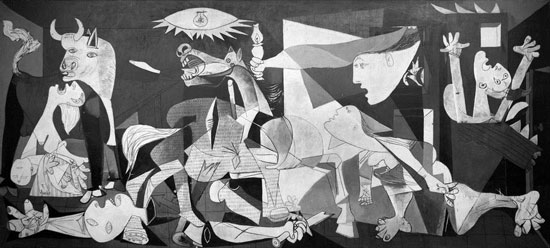
Picasso painted Guernica due to reports that the Basque town had been bombed in 1937 by the German and Italian air forces. Interestingly, Picasso was not in that small town during the bombing, nor did he visit Guernica after the bombing. He painted it while living in Paris. Picasso’s painting wasn’t an acute depiction of the bombing because “The artist must know the manner whereby to convince others of the truthfulness of his lies....”
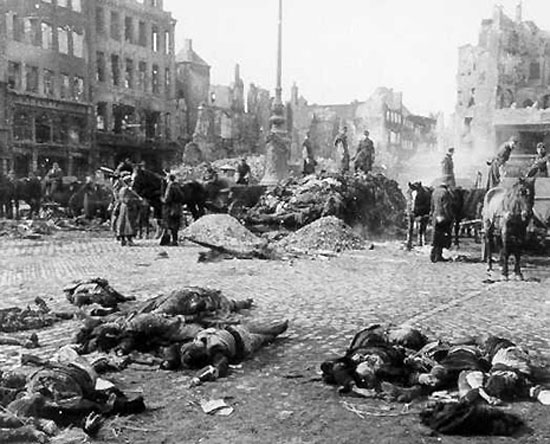
A photo of Guernica after the bombing
The Plowman realized that he had to act to save the starving masses. This scene poignantly declares that there is time to set the world on fire.
The Plowman seizes the responsibility to help the starving masses.
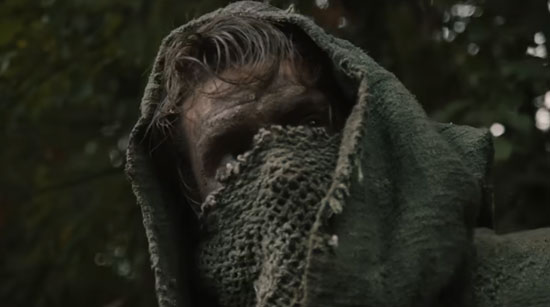
The Plowman turned into the hooded, masked man.
What is interesting about The Uprising: The Rise of Robin Hood is that the hooded and masked man was much closer to the naissance of Robin Hood. Therefore, from Picasso's mindset, it is less of a lie. Nonetheless, the Plowman still addresses the truth. In 1381, William Langland wrote the first literary story of Robin Hood in the poem Piers Plowman.
The story of Robin Hood and the Merry Men develops more fully in the 16th century with the addition of Maid Marian. The story developed further in the 19th century with the writer-illustrator creating books for young children.
Even more interesting are the reflections of Andrew Garfield about The Uprising: The Rise of Robin Hood. He hopes that the film “should act as a cautionary tale” for all the billionaires...And I hope that if any billionaires watch it, that they're scared s***less.”
Garfield, acting as a plowman during an interview about the movie, plows up some rich rocks. The one-liner of the movie is “there will be no peace until we are healed.” Then he adds, “I'm going to include the billionaires in that as well cuz they're the ones that might be the most soul sick...They're the ones that might need the healing the most in a way.”
Very few billionaires have ever read my essays. My readers who aren’t wealthy need to see The Uprising: The Rise of Robin Hood. After watching the film, I sat there for a moment. It was as if I had awakened from a slumber. I realized that I needed to be far more of a plowman. As I was about to leave the theater, I went up to the guy whom I paid for the movie and said that he had to see the film. It was telling an employee of the theater what was bubbling in my mind.
This article was posted on September 13th. On October 13th, I’m flying to Yangon, Myanmar. I want to attend Ti Ti, my granddaughter, graduating from Gusto University with her Bachelor of Science (Honors) degree in Computer Systems Engineering. Myanmar is a developing country like 2/3 of the world.
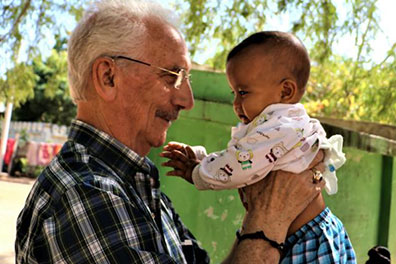
My children, the parents of my three granddaughters, have college educations, but that doesn’t make life easy. We met in 2013. Several years ago, during a family tour together, I met A Ngal Lay. She is my great-granddaughter; along with her sister and parents, they are a part of my family.
During those years, I see myself as a plowman. I reach out each month with wire transfers to assist them. I’m not a soldier; I’m not a priest. However, I am a more committed plowman after the movie. Believe me. You must see the movie. Then ask yourself whether you are a plowman or a part of the problem.
CineFound will allow you to watch The Uprising: The Rise of Robin Hood as a free trial offer. Sign up to watch Apple TV+. You will have a free week to watch this movie. If you wish to continue using CineFound, there will be a monthly charge. Or you can cancel your CineFound membership after watching the movie. Click on this link.
Visit the On Seeing the Light page to read more about this topic.
Visit the We Are Family page to read more about this topic.

Visit the Connecting the Dots page to read more about this topic.
Visit the Darkest Before Dawn page to read more about this topic.
Visit the Best and Worst of Times page to read more about this topic.
Visit the Dancing With Death page to read more about this topic.

Visit the Ti Ti page to read more about this topic.
Visit the A Ngal Lay page to read more about this topic.
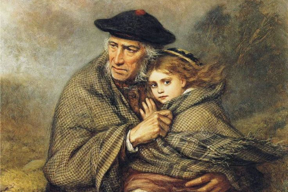
The Hand May Be a Little Child's
Visit the The Hand May Be a Little Child's page to read more about this topic.

Visit the Living a Life Well Lived page to read more about this topic.
Visit the Man in the Arena page to read more about this topic.
Visit the Burma/Myanmar page to read more about this topic.
09/13/26