






The Little One
After graduate school, I traveled all over Europe, went to the University of Edinburgh for a year of post-graduate studies, and traveled to places that I had missed the year before in Europe. I later travelled to the Middle East and then to Africa. In the first two decades of the 21st century, I took trips to Asia a handful of times, to French Polynesia, Europe again, and a couple of times to China, Tibet, and Africa. If I added the time spent overseas, it would be more than a couple of years.
Nonetheless, Ibn Battuta spent 30 years traveling in the first half of the 14th century. Ibn Battuta traveled more than anyone before him. It is estimated that his combined travels totaled 75,000 miles. When reflecting on his trips, he observed, “Traveling—it leaves you speechless, then turns you into a storyteller.”
I have no idea of the total miles I have travelled in jeeps, boats, and planes. However, Ibn Battuta is also correct in taking one's breath away. He was also spot on with another famous saying, “Traveling gives you a home in a thousand strange places, then leaves you a stranger in your own land.”
Had it not been for visiting Myanmar, I wouldn’t have discovered my family on my first trip while playing Scrabble with Ti Ti, my oldest granddaughter. On my last trip, I discovered my great-granddaughter, A Ngal Lay.
I told Moh Moh and Ko Ko, the parents of Ti Ti and her two younger siblings, that I wanted to go on a family tour together. They were both tour guides. In fact, Ko Ko was my guide on my second trip. I told them that I wanted to visit Bagan again and go on a hot air balloon ride over 40 square miles of ancient pagodas, shrines, and ..... However, where our family went was up to them. They took me to places that aren’t seen by many Westerners. One such place was a very small town called Set Set Yo. There was a road to the village. Actually, the road stopped in a large grassy area. All that I saw of Set Set Yo was a Buddhist monastery and a couple of outbuildings. I never saw the actual village.
There were two reasons for stopping at Set Set Yo. The parents wanted to give the Buddhist monks some money to assist them, along with providing several dozen young children with notebooks and pencils for school.
The other reason was to let me see young children who still wore the top-knot hairstyle, which went back many generations.
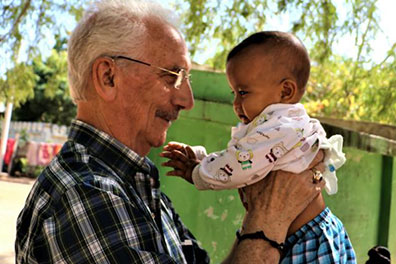
I busied myself carrying around a young child who wasn’t even one year old along with flipping young children. Watch the last child that I flipped. After flipping her, she just remained there until I did it again.
However, either Ti Ti or her uncle took this photo. Neither the little one nor I was aware that this picture was taken. We were attempting to grasp the reality of some old American and a young child meeting at Set Set Yo.
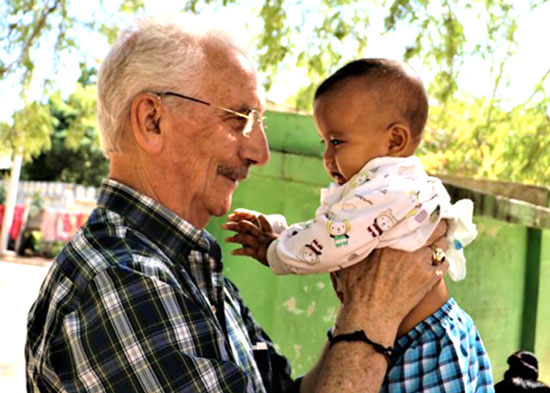
I don’t recall how or why I picked up this little one. I used the little one as her name as I carried her around. Finally, I asked Moh Moh how to say the little one in Burmese, which is A Ngal Lay. I realized that A Ngal Lay was my great-granddaughter. Since then, I added her to the funds that I wire transfer to my family. Then, they can either send the money to A Ngal Lay’s family or visit them.
This is a photo of Ti Ti and A Ngal Lay several years ago.
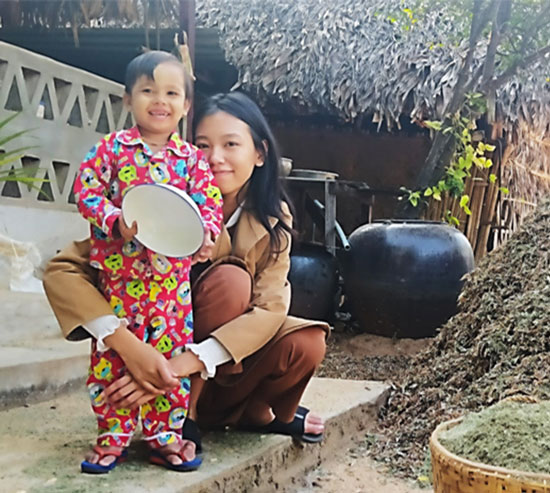
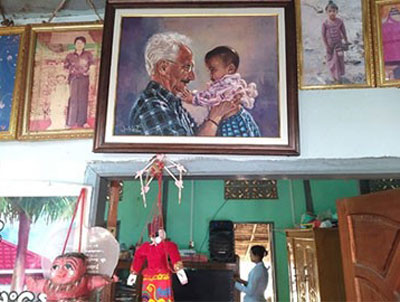
As I look at this photo, it haunts me that A Ngal Lay is a clone of Ti Ti. Ti Ti was nine when we first met. However, my first encounter with each of them transformed our relationship. We were family. I have a good friend who is a great artist in Myanmar; his name is Than. He painted a picture of A Ngal Lay and me when we first met.
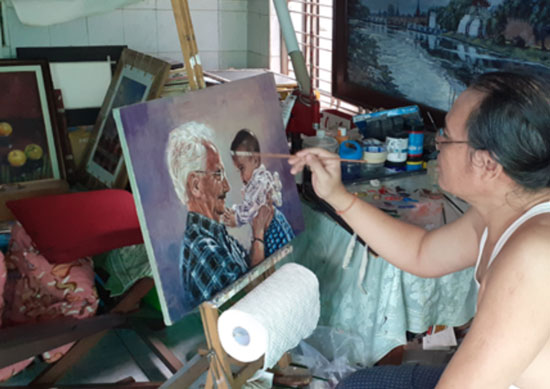
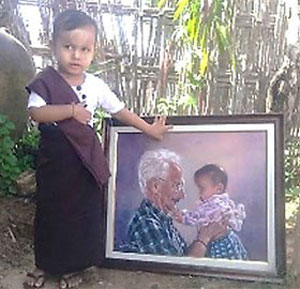
The painting was given to A Ngal Lay and her mother took this photograph of her and the picture.
I’m sitting in my home in Crown Point, and my family lives half a world away. I miss my family and will assist them in any way I can. This goes back to my mantra: “It is in giving that you get.” My family has given me a reason for being. I am lucky that we met.
In closing, one additional quote, this one from Bobby Kennedy. “Every generation inherits a world it never made; and, as it does so, it automatically becomes the trustee of that world for those who come after. In due course, each generation makes its own accounting to its children.”
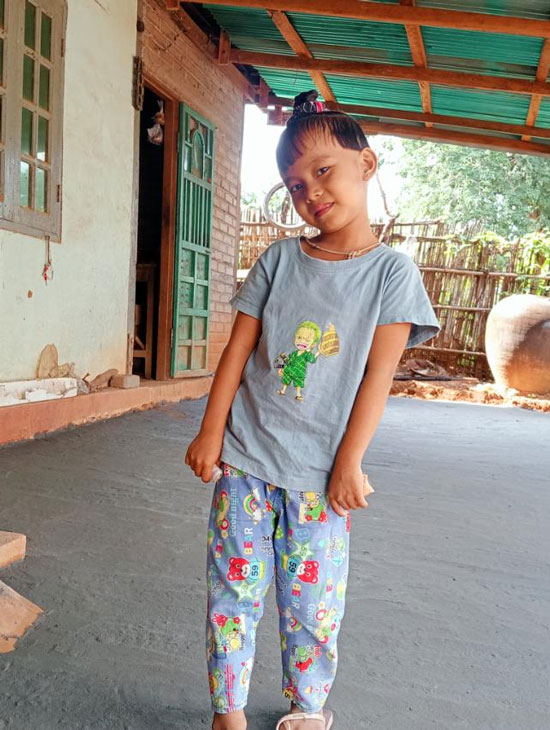
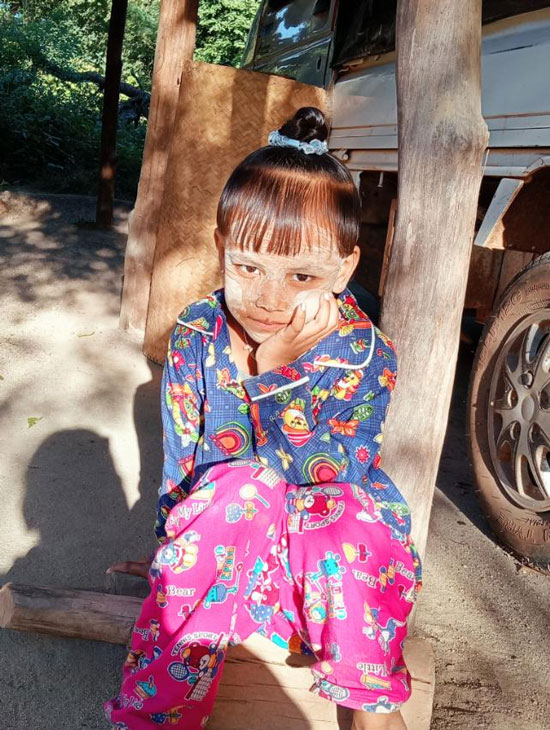
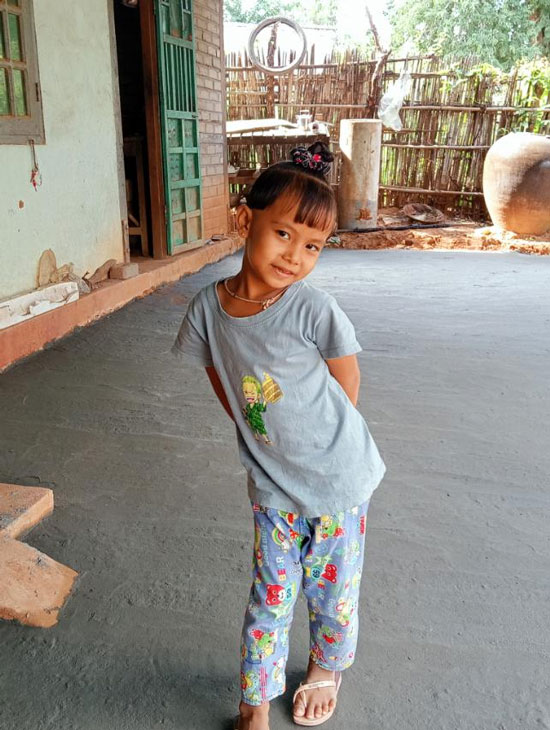
These are recent photos of A Ngal Lay, and she is adorned with her top-knot hairstyle.
It seems to me that it is our moral and ethical imperative to broaden and be more inclusive about those we deem to be family. In the grand scheme of things, we are all sisters and brothers of each other. When I think about my family in Myanmar, the term Asian or Southeast Asian is not what would be on the list of the top one hundred terms to describe them. All of us are a part of the family of man, unrelated to ethnic background, race, or religion. We need to become more and more inclusive of our family. Both you and your additional family members will benefit beyond belief. Who makes up your family?
Visit the On Seeing the Light page to read more about this topic.
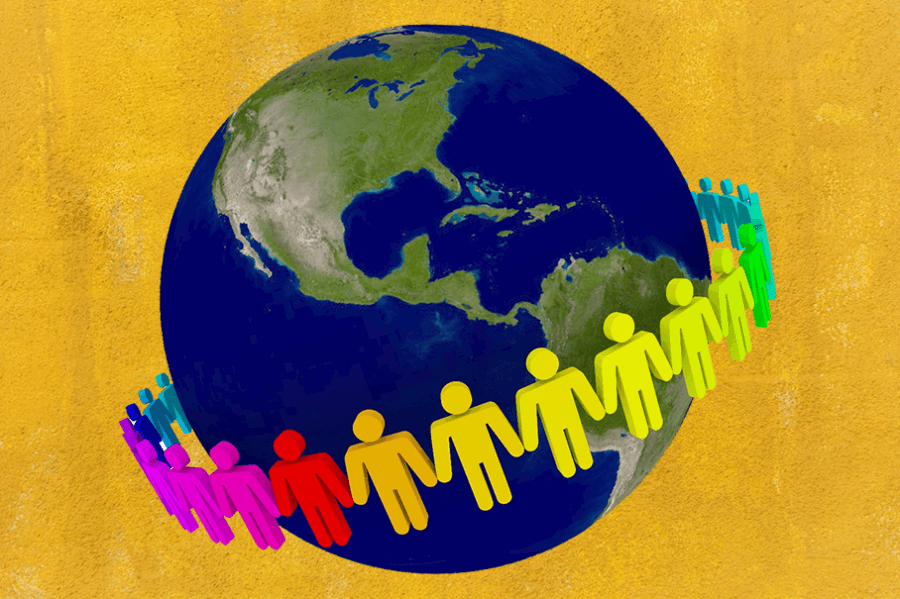
Visit the We Are Family page to read more about this topic.

Visit the Connecting the Dots page to read more about this topic.

Visit the Dreaming Dreams page to read more about this topic.
Visit the Bobby Kennedy page to read more about this topic.
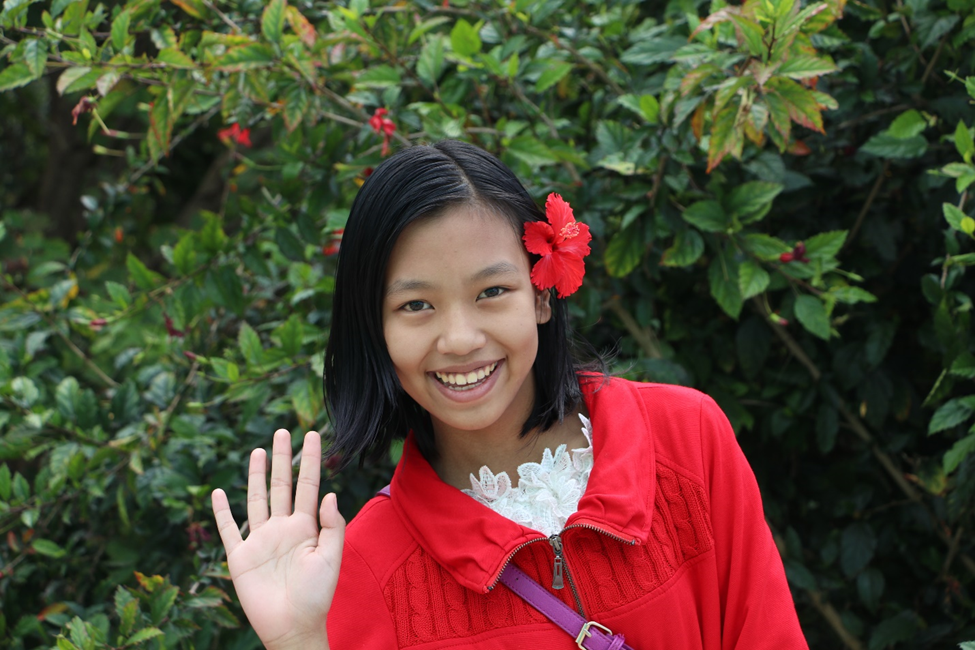
Visit the Ti Ti page to read more about this topic.
Visit the A Ngal Lay page to read more about this topic.
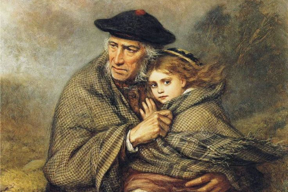
The Hand May Be a Little Child's
Visit the The Hand May Be a Little Child's page to read more about this topic.
Visit the Living a Life Well Lived page to read more about this topic.
Visit the Gilgamesh page to read more about this topic.
Visit the Burma/Myanmar page to read more about this topic.
11/28/25