






A Simple but Profound Truth
This is the backstory. Pablo Picasso was one of the great painters of the 20th century. He was born in Málaga on the Mediterranean coast, not far from Granada, in southern Spain. Along with a long list of paintings and pen and ink works, he is also known for his one-liner, “We all know that Art is not truth.” Picasso viewed art as a means to carry the message to the observer, even though the vehicle, a painting or other art form, may not be the actual truth.
Case in point. Denzel Washington was a retired CIA Black Ops operative in the movie The Equalizer 2. Even though he was officially no longer in the CIA, he continued to rectify injustice in society. The movie contains a litany of occasions where he assists those who have been mistreated. One example was an older teenager who had been drawn into a drug gang. Washington gives Miles a choice between using and selling street drugs or pursuing his love of painting. He loved, like Picasso, painting as well as pen and ink drawings. At the end of the movie, Miles had painted two outside brick walls of an apartment complex.
Interestingly, Miles’ artwork is similar to what Mark Twain penned. “The two most important days in your life are the day you are born and the day you find out why.” Miles found out that painting was his reason for being.
Finally, I have arrived at the reason for this essay. It is about finding my reason for being, to paraphrase Twain. There have been some important endeavors in my 83 years as I journeyed down my yellow brick road of life. However, nothing compares to discovering my family in Myanmar a dozen years ago.
And the genesis of that transformative moment was meeting Ti Ti at her home during my winter break from teaching. Ti Ti was also home during her winter break. At that time, she was a cute nine-year-old kid.
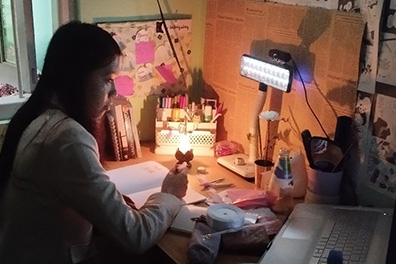
In a couple of weeks, Ti Ti will be graduating from Gusto University in Yangon, Myanmar. She will receive her Bachelor of Science (Honors) in Computer Systems Engineering. Ask me to explain how a person engineers computer systems. Ti Ti sent me her thirteen-page term paper, which was required for graduation. The title of her paper was “A Systematic Review of Predictive Modelling of User Disengagement and Compensation in Wearable Health Feedback Systems.” I reviewed the entire paper. I could pronounce every word, but I don’t have the foggiest idea about the content.
I have taught various humanities classes in the last quarter-century. In fact, the last class that I taught several years ago was an online world religion survey class. It was Ti Ti’s first college-level class. She and two other gals aced the class.
Several weeks ago, I asked Ti Ti do a video about our relationship as granddaughter and grandfather.
I have mentioned in articles about Ti Ti inheriting her IQ and good looks from my side of the family. Nonetheless, I have watched that video over and over again. I thought that, beyond being a dotting grandfather, I wanted to see from Ti Ti’s perspective regarding what drove her in life.
No one can grasp someone else’s perspective since everyone has their own Weltanschauung or worldview. So, I wanted to understand Ti Ti’s mindset. Ti Ti talked about being a student of mine in an online class. I wanted all my students, at least in my class, but hopefully during their entire lives, to think outside the box. I saw many times when Ti Ti was posting replies to other students, having felt free to question the ideas of other classmates. Equally, Ti Ti and other students must be free to have their classmates question their ideas that they posted.
At the personal level, our relationship is a reciprocal situation. It goes back to who benefits. In the classroom, a teacher who encourages a student to think does benefit the student, but it does the same for the teacher. Having taught for a quarter century, I was fascinated to read both their questions and responses.
Finally, one concluding comment. Often, when I email Ti Ti a long epistle of mine, I’ll write that comment and continue on for several more finally comments before posting the email. This is a finally comment directed to my readers about Myanmar.
I’m sensitive to the term Third World Countries for various reasons. We, in the First World, came up with that term for starters. We are saying that the countries in the First World are the best. Countries like Russia make up the Second World. Countries in the Third World are less than even the Russians. Not only have we created the terms for the three groups, but many of the problems in the Third World were also created by us over the centuries, due to colonization and taking oil, minerals, and other resources from 80-85% of the population of the world.
We are using terms of first, second, and third has become less politically correct. An alternative is less developed or developing countries. While we think that it is more politically correct, we are responsible for the hunger, poverty, and medical problems that the vast majority of the world faces.
This brings into clear focus the issue that I face. Anyone who reads my website knows about my family in Myanmar. Ti Ti has two younger sisters who are my grandchildren, and their parents are my children. The last time I visited them, we went on a family tour together. Most of the places I had never been to before, or even recognized the names of the places we visited.
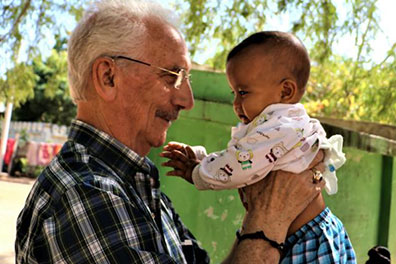
Such a place was Set Set Yo. My children wanted to show me a Burmese ethnic group where the children still wore top-knot haircuts. That tradition dates back centuries. While we were there, I flipped young children, which they enjoyed as much as I did. I don’t recall how I picked up a small child, who wasn’t even a year old. I carried her around when I wasn’t flipping some of the older children.
What happened to me was the same experience that I had when I played Scrabble with Ti Ti, except that A Ngal Lay was my great-granddaughter. It was a transformative moment in my life. They are family. I care for them. Some people know that I have wired transferred funds both to them and A Ngal Lay. They question my judgement. Since I’m retired, they suggest that I delay sending money to my family. They say that I need to be cautious; besides, at 83, I might have some major medical problem. They suggest that I wait until I go belly-up before sharing with my family.
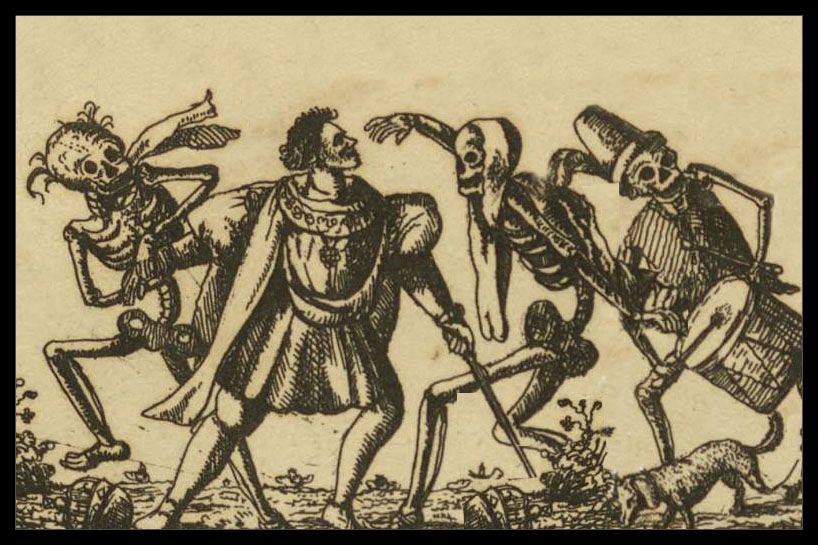
Hey, I’ve danced with death twice years ago. I’m healthier than people that I know in their 80s. But waiting might be financially better for me; it isn’t for my family. Had I waited a decade ago, Ti Ti wouldn’t have attended a college preparatory high school, nor graduating soon from Gusto University. Waiting to assist my family for the last decade jeopardizes their lives because I wanted to play it safe? Ethically, that is a no-brainer.
Beyond the obvious, at least to me, who benefits from my wire transfers. Granted, my family. I have written about a mantra that I came up with: “It is in giving that we get.” My grandmother on my mother’s side came up with her one-liner: “I love me, I think I’m grand, when I go to heaven, I’ll hold my hand.”
Miles painted the wall of an apartment. “I leave you with the best of myself.” People in that apartment complex benefited from his painting. However, he felt good himself as a result of his giving.
An addendum. Don’t forget what Morgan Freeman said to Jack Nicholson in The Bucket List. Morgan Freeman tells Jack Nicholson that when an Egyptian dies, that person’s soul is asked two questions before being allowed into the afterlife. “Have you found joy in your life? Followed by “Has your life brought joy to others?”
Visit the College Days page to read more about this topic.
Visit the On Seeing the Light page to read more about this topic.

Visit the We Are Family page to read more about this topic.

Visit the Connecting the Dots page to read more about this topic.
Visit the “I’m Alive!” page to read more about this topic.

Visit the Dreaming Dreams page to read more about this topic.
Visit the The Last Lecture page to read more about this topic.
Visit the Dancing With Death page to read more about this topic.

Visit the Ti Ti page to read more about this topic.
Visit the A Ngal Lay page to read more about this topic.
Visit the My Hauntings page to read more about this topic.
The Hand May Be a Little Child's
Visit the The Hand May Be a Little Child's page to read more about this topic.

Visit the Living a Life Well Lived page to read more about this topic.
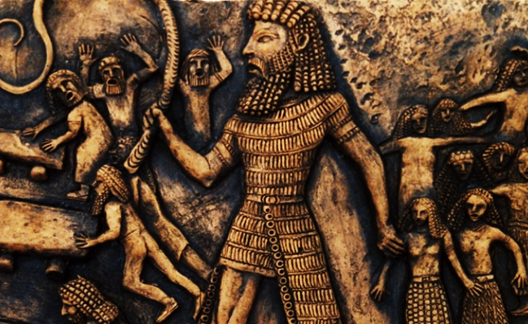
Visit the Gilgamesh page to read more about this topic.
Visit the Burma/Myanmar page to read more about this topic.
01/26/26